
From the substack of Exponential View. With all of the really grim war and climate news out there, it's a breath of fresh air to read something optimistic about the future of energy. Excerpt:
The Strait of Hormuz is just twenty-one miles at its narrowest, shorter than a morning commute in most cities. Through it flows a fifth of the world’s oil. When it closed last week, it knocked 20 million barrels a day off global supply, roughly the equivalent of the next five biggest oil shocks combined. The price of a barrel crossed $100 in days. That is what a civilization hostage to scarcity looks like.
Electricity grids moved past oil a generation ago. But there are two billion internal combustion engines on the roads that still run on a depletion curve that gives less the more you extract, shaped by geology and chokepoints and cartel politics. The current scale makes it look permanent, but it’s not.
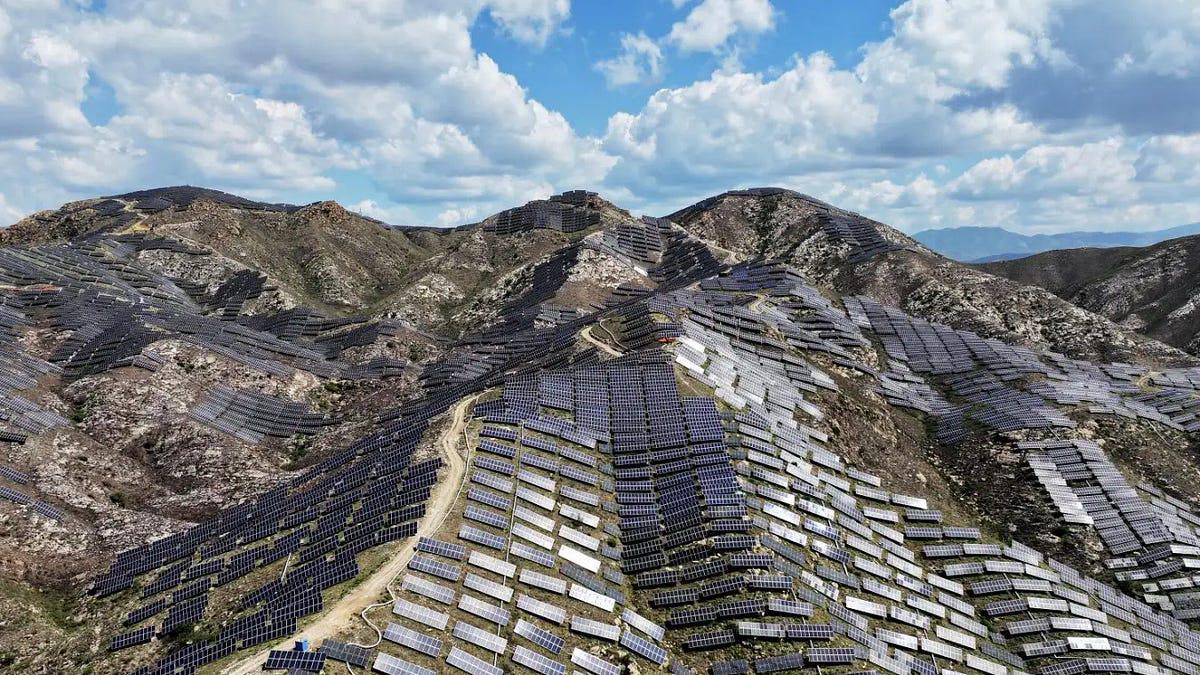
That’s because energy now sits on two curves and they move in opposite directions. Oil follows depletion – extract more, get less, pay more. Solar follows learning – make more, get cheaper. Every doubling of cumulative production over the past fifty years has cut the price of solar photovoltaic modules by 23.7%1. Solar panels cost $1,000 per watt in 1958; the cheapest cost seven cents today. The two curves crossed a decade ago but only one of them is still falling. That is the difference between scarcity and abundance – and abundance is winning.
Azeem Azhar: The Case for Radical Solar Optimism
byu/Epicurus-fan inenergy
Posted by Epicurus-fan