
The true bottleneck in Ethereum dApp architecture isn't just on-chain gas, it's the off-chain infrastructure required to read the state. When protocols are designed without considering how data is indexed, they force massive hardware and cost requirements onto the ecosystem.
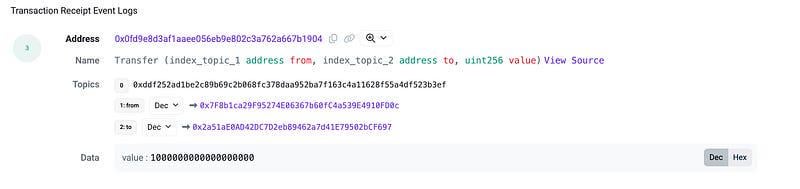
The Blind Spot of Internal Transfers: Standard contract-to-contract ETH transfers (call{value: x}()) don't emit logs. Because they bypass block bloom filters, standard node queries like eth_getLogs miss them entirely.
Trade-off: To index these reliably without protocol-level changes, you are forced into EVM tracing (debug_traceTransaction). This is incredibly I/O heavy, essentially requiring dedicated archive nodes or premium RPC tiers. Emitting custom on-chain events for internal transfers is a critical architectural pattern if you develop your own protocol that you want to monitor, it shifts the burden away from expensive execution traces and local state simulations, saving infrastructure operators massive overhead.
Infrastructure Resilience vs. WebSockets: For low-latency dApps, eth_subscribe over WebSockets is the standard. However, long-lived WS connections are notoriously flaky and silently drop packets, leading to degraded, out-of-sync frontends.
Architecture standard: A resilient Ethereum stack requires a hybrid model. Maintain the WS connection for real-time mempool and head-of-chain detection, but always run a background worker polling eth_getLogs with a sliding block window to patch missed events during WS reconnects.
JSON-RPC Network Overhead: Spamming nodes with individual read requests congests RPCs. MulticallV3 batching is mandatory for minimizing network round trips.
Trade-off: When wrapping complex calls, using tryAggregate handles partial successes gracefully. However, it significantly increases EVM execution cost due to internal CALL overhead and memory expansion when capturing return data you might discard. If your batch loop is too large, you will hit the strict execution timeouts or global eth_call gas caps enforced by commercial RPCs, causing the node to drop the entire request.
Source/Full Breakdown:https://andreyobruchkov1996.substack.com/p/ethereum-dev-hacks-catching-hidden-transfers-real-time-events-and-multicalls-bef7435b9397
The Hidden Infrastructure Costs of Ethereum dApps: EVM Tracing, RPC Overhead, and Indexing
byu/Resident_Anteater_35 inethereum
Posted by Resident_Anteater_35