
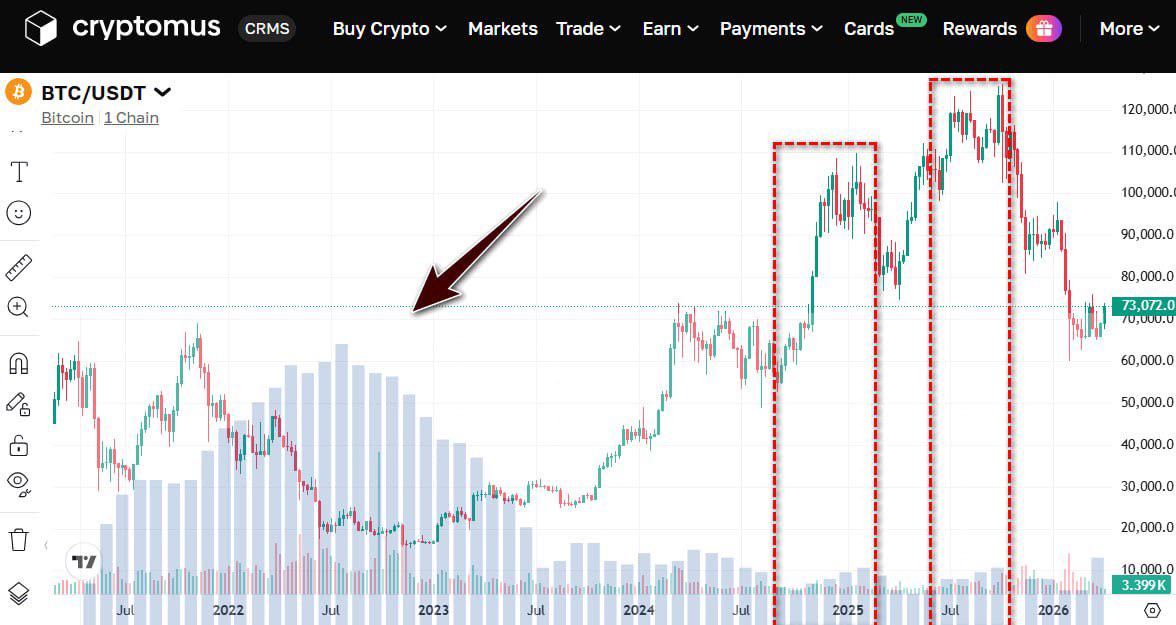
Analysts are optimistic that Bitcoin could push toward $80K once Iran and the U.S. reach a lasting peace in the Middle East. But the war has already done real damage to the global economy — damage that crypto will have a hard time shrugging off.
The hidden threat for Bitcoin is hiding in March's CPI numbers. U.S. consumer inflation hit 3.3% on an annual basis. Even the core PCE index — the Fed's preferred gauge — is hovering close to 3.0%.
The Fed cut rates early, banking on inflation returning to the 2% target. That's clearly not happening anytime soon. And if inflation pushes past 4%, the Fed would have no choice but to hike rates on an emergency basis.
Bitcoin is often pitched as an inflation hedge, but the chart tells a more nuanced story. BTC tends to do well when price growth is modest. Once inflation climbs above roughly 3.5%, Bitcoin tends to break down — exactly what happened in 2022 and 2023.
Bitcoin can't rally while the U.S. economy is stagnating, and a stagflationary environment tends to drag down GDP across developed economies as well. That's the likely outcome of sustained inflationary pressure.
Even if the Strait of Hormuz reopened today, oil prices wouldn't fall significantly — and gas prices even less so. Energy is a major driver of inflation, but the war has hit other sectors too: agricultural goods, steel production, logistics.
My take: as long as inflation keeps rising, buying Bitcoin is probably not the right move.
https://i.redd.it/2k1x2myzlpug1.jpeg
Posted by tornavec
1 Comment
Yea definitely, any rally is going to be weak and end up just being a market maker liquidity grab until the Fed starts getting dovish. Until then, shorts only