I also hear the Tundra melting in Siberia is causing a negative feedback loop. Now we have farms in Germany contributing too. yay
Talking_on_the_radio on
How much would large scale composting effect carbon and methane emissions?
If I’m cooking from scratch, about half of my food goes to compost. I try to feed what I can to the dog, then compost his waste in the yard. I promise I’m not wasteful.
If I’m not mistaken, compost can regulate moisture in the soil much better.
I’m not saying it would fix the problem, but at this point, many thousands of small solutions can be just as impactful as one or two large solutions. I think we need to do everything we can here.
dumnezero on
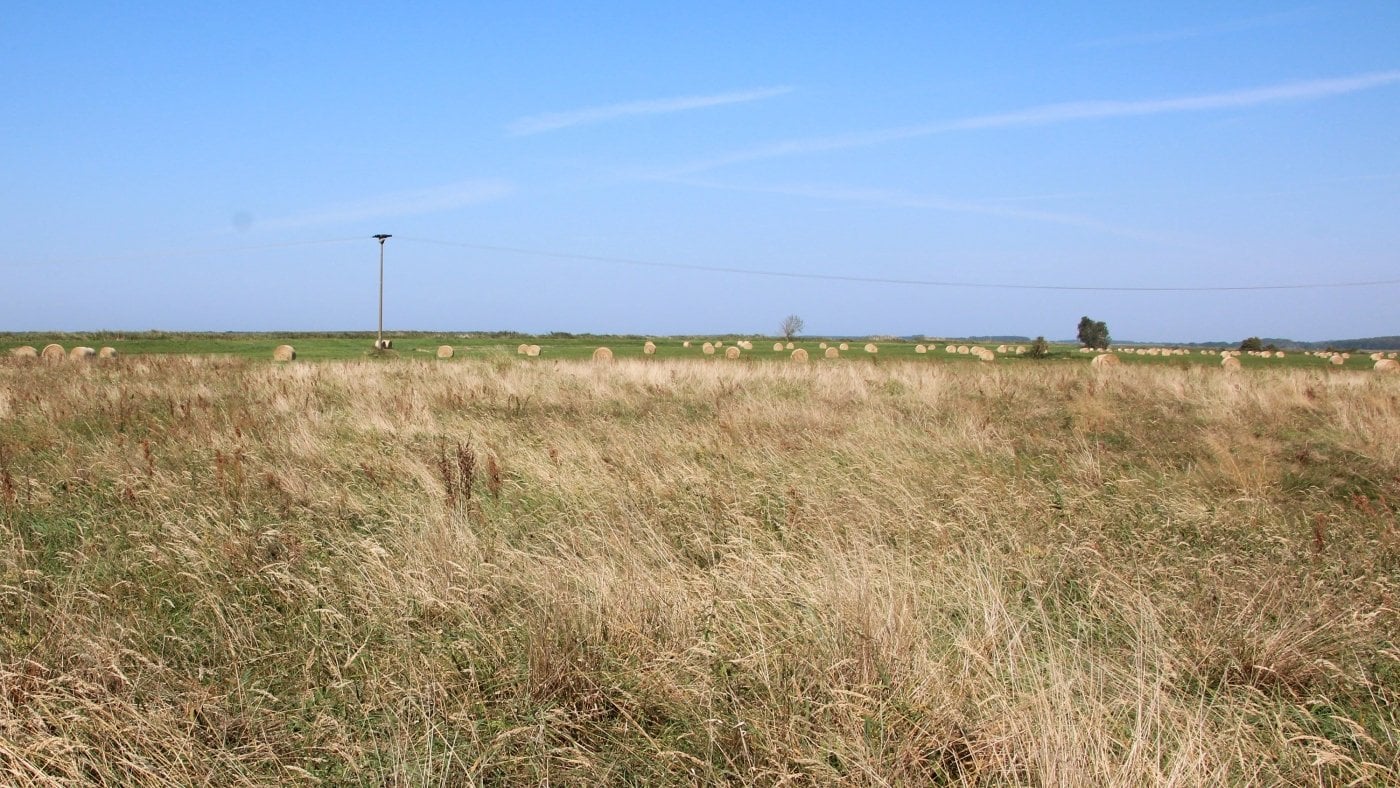
>The reason, in a word, is drainage. Many decades ago, this land was claimed for agriculture using techniques pioneered by Dutch experts. A system of drainage ditches, pumps, and dikes removed water from the land so farmers could graze cattle or drive tractors across it to harvest hay. “If that dike weren’t there,” Espig says, gesturing toward the earthen wall at the far end of the field, “this area in front of us would be covered with water.”
Nothing in this is a mystery. Just like deforestation, “dewetlandization” (drying) is terrible for the climate and ecology.

3 Comments
I also hear the Tundra melting in Siberia is causing a negative feedback loop. Now we have farms in Germany contributing too. yay
How much would large scale composting effect carbon and methane emissions?
If I’m cooking from scratch, about half of my food goes to compost. I try to feed what I can to the dog, then compost his waste in the yard. I promise I’m not wasteful.
If I’m not mistaken, compost can regulate moisture in the soil much better.
I’m not saying it would fix the problem, but at this point, many thousands of small solutions can be just as impactful as one or two large solutions. I think we need to do everything we can here.
>The reason, in a word, is drainage. Many decades ago, this land was claimed for agriculture using techniques pioneered by Dutch experts. A system of drainage ditches, pumps, and dikes removed water from the land so farmers could graze cattle or drive tractors across it to harvest hay. “If that dike weren’t there,” Espig says, gesturing toward the earthen wall at the far end of the field, “this area in front of us would be covered with water.”
Nothing in this is a mystery. Just like deforestation, “dewetlandization” (drying) is terrible for the climate and ecology.
[The emissions are tricky](https://www.cell.com/one-earth/fulltext/S2590-3322(22)00579-6), [yes](https://bg.copernicus.org/articles/6/1127/2009/). We still need wetlands as carbon sinks, and restoration would help.