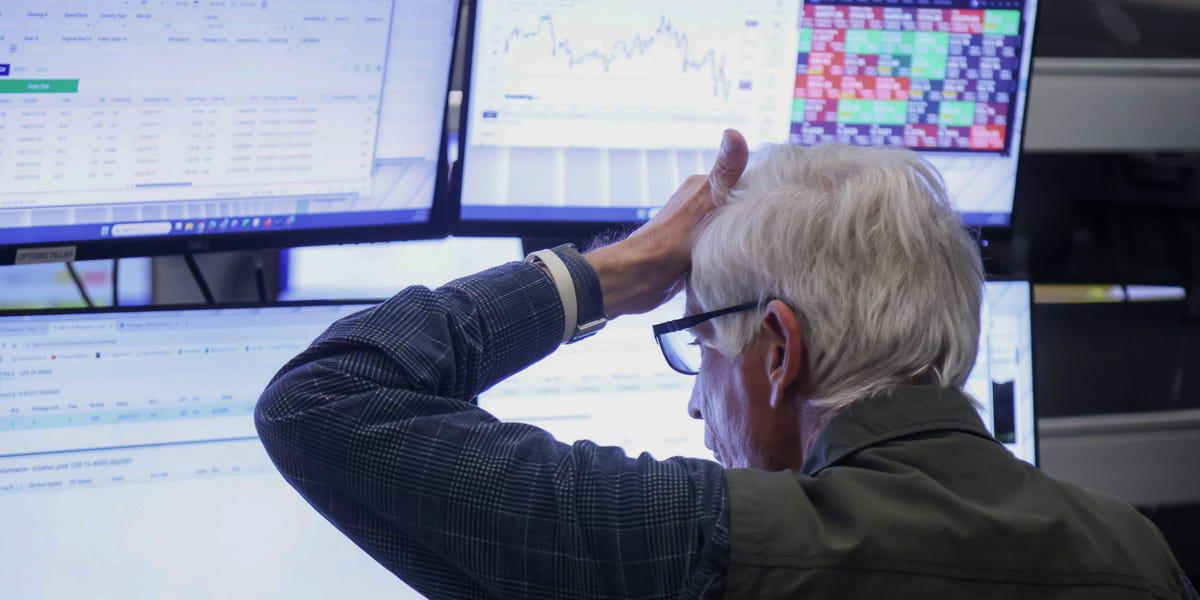
*Markets aren’t prepared for the next spasm of economic turmoil brought on by the Iran war, Robert Pape, a professor at the University of Chicago, said over the weekend.*
*Pape, who writes The Escalation Trap newsletter on Substack, responded to news of the Strait of Hormuz blockade, writing that he believes the economic consequences of the war are about to expand far beyond the price of oil—and he says the effects will be felt in days.*
*”Within 10 days, parts of the global economy will start running short of critical goods,” he wrote in a post on X. “Not just higher prices – Shortages. Markets are not ready for this.”*
*Until now, global oil markets have been ground zero for war-related impacts, but Pape said the coming second stage he’s predicting will see economic conditions deteriorate as other products are disrupted more heavily, including fertilizer and plastics.*
*”Once inventories run down, this stops being about expensive inputs. It becomes about missing inputs,” Pape noted. “Factories don’t slow because costs rise. They stop because materials don’t arrive.”*
*He also added that America’s energy independence won’t spare the US economy from more pain to come, echoing other commentators who have said recently that the US isn’t isolated from the disruptions.*
*Michael Cembalest of JPMorgan Private Bank recently argued that despite Trump’s claims, energy independence won’t shield the US from energy shocks.*
*”When supply chains seize, the shock transmits via trade reductions,” Pape added. “This is the real shift: prices no longer determine outcomes. Access does.”*
*Pape advised investors to pay attention to one thing this week: if shipping flows resume through the Strait of Hormuz. He predicted that if maritime traffic doesn’t resume soon, the economic tightening will continue.*
*”By the time shortages show up in headlines, it’s already too late,” he warned. “That’s how these shocks work.”*
IEPforall on
Believe it or not calls
BotBuilderVenture on
The tension between looming supply shocks and current market resilience stems from a fundamental disconnect between geopolitical warnings and the practical mechanics of modern finance. On one hand, figures like Robert Pape from the University of Chicago argue that the global economy is standing on a precipice, suggesting that the markets have failed to price in the true cost of escalating conflicts, such as a potential war-fueled disruption in the Middle East, which could trigger a “supply-side shock” far beyond just energy prices. The logic here is that investors are too focused on short-term corporate earnings and the AI-driven productivity boom to acknowledge how quickly trade barriers and labor shortages can reignite inflation. However, the markets have remained surprisingly resilient because they are no longer the monolithic entities they once were; today’s resilience is built on corporate hedging, diverse supply chains that have been “de-risked” since 2020, and a massive influx of private capital that continues to buy the dip. While the experts warn of a “black swan” event that could catch everyone off guard, the reality is that many investors view these recurring warnings as background noise, betting that solid fundamentals and the cushioning effect of high-net-worth consumption will outweigh the risks of a localized supply squeeze.

3 Comments
Article excerpt:
*Markets aren’t prepared for the next spasm of economic turmoil brought on by the Iran war, Robert Pape, a professor at the University of Chicago, said over the weekend.*
*Pape, who writes The Escalation Trap newsletter on Substack, responded to news of the Strait of Hormuz blockade, writing that he believes the economic consequences of the war are about to expand far beyond the price of oil—and he says the effects will be felt in days.*
*”Within 10 days, parts of the global economy will start running short of critical goods,” he wrote in a post on X. “Not just higher prices – Shortages. Markets are not ready for this.”*
*Until now, global oil markets have been ground zero for war-related impacts, but Pape said the coming second stage he’s predicting will see economic conditions deteriorate as other products are disrupted more heavily, including fertilizer and plastics.*
*”Once inventories run down, this stops being about expensive inputs. It becomes about missing inputs,” Pape noted. “Factories don’t slow because costs rise. They stop because materials don’t arrive.”*
*He also added that America’s energy independence won’t spare the US economy from more pain to come, echoing other commentators who have said recently that the US isn’t isolated from the disruptions.*
*Michael Cembalest of JPMorgan Private Bank recently argued that despite Trump’s claims, energy independence won’t shield the US from energy shocks.*
*”When supply chains seize, the shock transmits via trade reductions,” Pape added. “This is the real shift: prices no longer determine outcomes. Access does.”*
*Pape advised investors to pay attention to one thing this week: if shipping flows resume through the Strait of Hormuz. He predicted that if maritime traffic doesn’t resume soon, the economic tightening will continue.*
*”By the time shortages show up in headlines, it’s already too late,” he warned. “That’s how these shocks work.”*
Believe it or not calls
The tension between looming supply shocks and current market resilience stems from a fundamental disconnect between geopolitical warnings and the practical mechanics of modern finance. On one hand, figures like Robert Pape from the University of Chicago argue that the global economy is standing on a precipice, suggesting that the markets have failed to price in the true cost of escalating conflicts, such as a potential war-fueled disruption in the Middle East, which could trigger a “supply-side shock” far beyond just energy prices. The logic here is that investors are too focused on short-term corporate earnings and the AI-driven productivity boom to acknowledge how quickly trade barriers and labor shortages can reignite inflation. However, the markets have remained surprisingly resilient because they are no longer the monolithic entities they once were; today’s resilience is built on corporate hedging, diverse supply chains that have been “de-risked” since 2020, and a massive influx of private capital that continues to buy the dip. While the experts warn of a “black swan” event that could catch everyone off guard, the reality is that many investors view these recurring warnings as background noise, betting that solid fundamentals and the cushioning effect of high-net-worth consumption will outweigh the risks of a localized supply squeeze.