
Galaxy Digital (GLXY) is still primarily valued by the market as a financial services company, with earnings tied to trading activity, Bitcoin cycles, and broader digital asset volatility. That framework is increasingly outdated because it does not reflect the scale or structure of the AI infrastructure business being built through Helios, a hyperscale data center campus in West Texas designed for large scale artificial intelligence compute workloads.
Helios is positioned around one of the most constrained inputs in the AI economy, which is power availability at industrial scale. The campus is being developed in phases and is designed to scale into the multi-gigawatt range over time, supported by secured grid capacity in ERCOT. This is not a traditional data center buildout aimed at speculative colocation demand. It is purpose-built infrastructure aligned with long-duration AI compute requirements where power, land, and speed-to-deployment are the bottlenecks.
A major catalyst that materially de-risks the early phases of this buildout is the structured agreement with CoreWeave, an AI cloud infrastructure provider scaling aggressively alongside demand for GPU compute. CoreWeave As part of this partnership, CoreWeave has committed approximately $1.4 billion in project financing tied directly to the Helios buildout, helping fund infrastructure expansion while also anchoring long-term compute demand. This structure is important because it effectively aligns capital deployment with contracted usage rather than speculative capacity expansion.
Based on disclosed expectations around this agreement, Helios is projected to generate roughly $1 billion in annual revenue for Galaxy once the relevant phases are fully operational and utilization ramps. This figure reflects infrastructure-level economics rather than pure operating profit, meaning it is tied to capacity deployment, power usage, and long-term contracted compute demand rather than volatile trading activity. In practical terms, this shifts a meaningful portion of Galaxy’s future earnings base into recurring, infrastructure linked cash flow rather than market sensitive revenue streams.
The importance of this structure is that Helios transitions from being a development stage asset into a partially de-risked, contract backed AI infrastructure platform. Instead of building capacity first and searching for demand later, Galaxy is scaling infrastructure alongside anchored demand and financing support. The $1.4 billion in project financing from CoreWeave functions not only as capital support but also as a signal of committed utilization for early build phases, reducing uncertainty around ramp timing and adoption.
As Helios expands beyond initial phases, the revenue profile of Galaxy begins to materially shift. The company moves from being primarily dependent on market conditions toward a hybrid structure where a growing portion of EBITDA is driven by contracted AI infrastructure cash flows. This creates a dual engine model where operations remain cyclical upside exposure, while Helios becomes a more stable, long-duration revenue base tied to physical compute demand.
The market inefficiency today is that GLXY is still being valued predominantly through a financial services lens rather than an infrastructure or AI compute framework. If Helios executes according to its current buildout plan, and if the projected $1 billion annual revenue contribution materializes at scale, the business profile evolves into something structurally different. At that point, Galaxy is no longer just a native financial company with an AI initiative. It becomes a power-constrained AI infrastructure operator with an embedded financial business layered on top.
In traditional market re-rating cycles, businesses that transition from volatile financial earnings models into contracted infrastructure cash flow models typically see valuation frameworks expand significantly due to improved visibility, duration, and scarcity of underlying assets. Helios represents that type of transition mechanism within Galaxy, with CoreWeave acting as the anchor tenant and financing partner that helps initiate the shift from speculative development to contracted AI infrastructure scale.
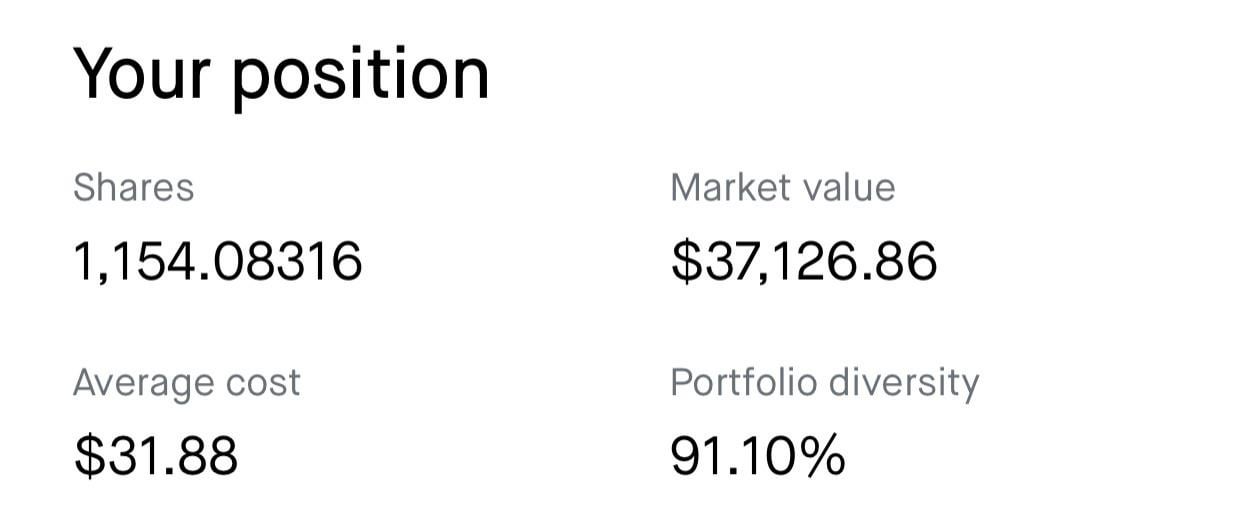
My position is 1154 shares at 31.88.
This is not financial advice.
Edit:
TLDR: Galaxy Digital is still being valued like a financial company, but Helios is shifting it into an AI infrastructure business. The CoreWeave deal includes about $1.4B in project financing and anchors early demand, with expectations of around $1B in annual revenue once buildout phases are online. This turns Helios into a contracted AI compute campus rather than a speculative data center, meaning a large portion of GLXY’s future earnings could come from stable infrastructure cash flows, which is why the market may eventually re-rate the stock significantly if execution continues.
https://i.redd.it/kgsyh9bxtp0h1.jpeg
Posted by j1022
1 Comment
Really solid DD. The biggest point here is the market still seems to price GLXY like a crypto trading business, while Helios is starting to look more like scarce AI infrastructure with contracted demand behind it. If they execute, the multiple the market applies to those cash flows could look very different in a few years.